
Organisations often face complex, interconnected challenges - modernising legacy systems, building digital capabilities, unlocking data value, and aligning technology with strategic goals.
Read how Digital Advantage works with organisations to navigate these problems - combining research, strategy, and practical implementation to deliver meaningful outcomes. Each case study demonstrates how thoughtful digital strategy, innovation, and capability development can help organisations adapt, grow, and position themselves for long-term success in an increasingly digital world.
Case Studies







Enabling the Future of Connected Cities

The move to 5G introduces a far more demanding infrastructure model than earlier mobile technologies. Instead of relying mainly on traditional large cell towers, effective 5G deployment often depends on dense networks of smaller sites embedded across the built environment.
That creates a difficult, multi-layered challenge. Operators need more locations, lower deployment costs, faster access to assets, and fewer planning barriers. At the same time, public bodies hold extensive estates of potentially useful infrastructure, but these assets are not typically configured, assessed, or managed as part of the telecoms supply chain.
The key challenge was determining whether these assets could form the foundation of a new shared infrastructure model that would accelerate 5G deployment while creating economic value for both the telecommunications sector and the public sector.
The Challenge
Building a Business Case for Shared Infrastructure

Digital Advantage undertook a feasibility and strategy study exploring how public infrastructure could support large-scale 5G deployment.
The study evaluated candidate assets such as streetlights, traffic signals, rooftops, and other public structures to determine their suitability for hosting 5G small-cell equipment. It also assessed deployment scenarios, infrastructure costs, operational requirements, and emerging commercial models for shared network infrastructure. This project addressed that intersection: the technical, commercial, and strategic challenge of turning underused public infrastructure into a platform for next-generation connectivity.
The analysis demonstrated that shared “neutral host” infrastructure - where multiple operators utilise the same physical assets - could significantly reduce deployment costs while accelerating rollout. The work also identified viable commercial frameworks through which public sector organisations could participate in the digital infrastructure ecosystem, including leasing arrangements, partnership models, and new revenue mechanisms.

Why it Matters - Foundations for the Connected Economy
The rapid expansion of high-capacity digital connectivity is essential for the next generation of economic activity. Technologies such as smart cities, the Internet of Things, autonomous systems, immersive digital services, and Industry 4.0 all rely on robust and ubiquitous connectivity.
By exploring how existing public infrastructure can support shared network deployment, this work highlights a new role for the public sector in enabling digital transformation. It demonstrates how collaboration between infrastructure owners, telecommunications providers, and technology innovators can unlock new economic value while accelerating the rollout of critical digital infrastructure.
The approach also illustrates a broader shift in how connectivity ecosystems will evolve - moving from isolated infrastructure ownership toward collaborative models that support innovation, competition, and the growth of digitally connected communities.
Designing the Future of Smart Mobility
The Challenge - Reimagining Mobility in a Connected World

Modern cities face a complex: how to move people efficiently while reducing congestion, emissions, and reliance on private cars. Traditional transport systems often struggle to connect residential areas with key employment zones, particularly for last-mile journeys—the final stretch between public transport hubs and workplaces.
At the same time, digital technologies are reshaping expectations. Citizens increasingly expect seamless, on-demand services similar to those they experience in the digital economy. Emerging technologies such as 5G connectivity, Mobility-as-a-Service (MaaS), and Connected Autonomous Vehicles (CAVs) present an opportunity to rethink how urban mobility works.
The challenge was to explore whether these technologies could be combined to create a future-ready transport ecosystem—one capable of improving accessibility to employment areas, supporting sustainable mobility, and laying the foundations for smarter, more connected cities.
Exploring a Next-Generation Transport Ecosystem

Digital Advantage conducted a strategic feasibility study examining how a digitally enabled mobility system could transform local transport networks.
The work combined policy analysis, technical research, and stakeholder engagement to explore how 5G connectivity and autonomous vehicle technology could support a new model of transport service delivery. The project examined the role of Mobility-as-a-Service platforms, which integrate multiple transport options - such as buses, shared vehicles, and micro-mobility into a single digital interface that allows users to plan, book, and pay for journeys seamlessly.
The study assessed:
The potential role of connected autonomous vehicles in supporting last-mile mobility.
The communications infrastructure requirements, including 5G connectivity and vehicle-to-infrastructure communication.
Opportunities to utilise existing public infrastructure assets, such as street furniture, lighting, and traffic systems, as part of a connected mobility network.
Strategic routes and locations suitable for pilot deployments and innovation trials.
The outcomes included a clear set of recommendations for developing a future transport ecosystem, including potential deployment approaches, infrastructure considerations, and a roadmap for piloting digitally connected mobility services.
Why it Matters - Building the Foundations for Smart Cities

The future of mobility sits at the intersection of digital transformation, sustainability, and economic development. Connected transport systems have the potential to transform how cities function—improving access to employment, reducing congestion, and supporting low-carbon travel.
Connected autonomous mobility is expected to become a major global industry, with significant economic opportunities in areas such as advanced communications networks, intelligent transport systems, data services, and digital platforms.
For regions and cities, early engagement with these technologies offers the chance to:
Attract investment and innovation in next-generation mobility infrastructure
Develop new digital skills and economic opportunities
Improve accessibility and inclusivity in transport systems
Support environmentally sustainable urban development
By exploring how digital infrastructure and mobility technologies can work together, this work provides a blueprint for how cities can prepare for the next era of intelligent, connected transport systems.
Transforming Payment Workflows in the Construction Supply Chain
The Challenge: Transforming Inefficient Payment Workflows

In many construction projects, money moves slowly - even when the work moves fast.
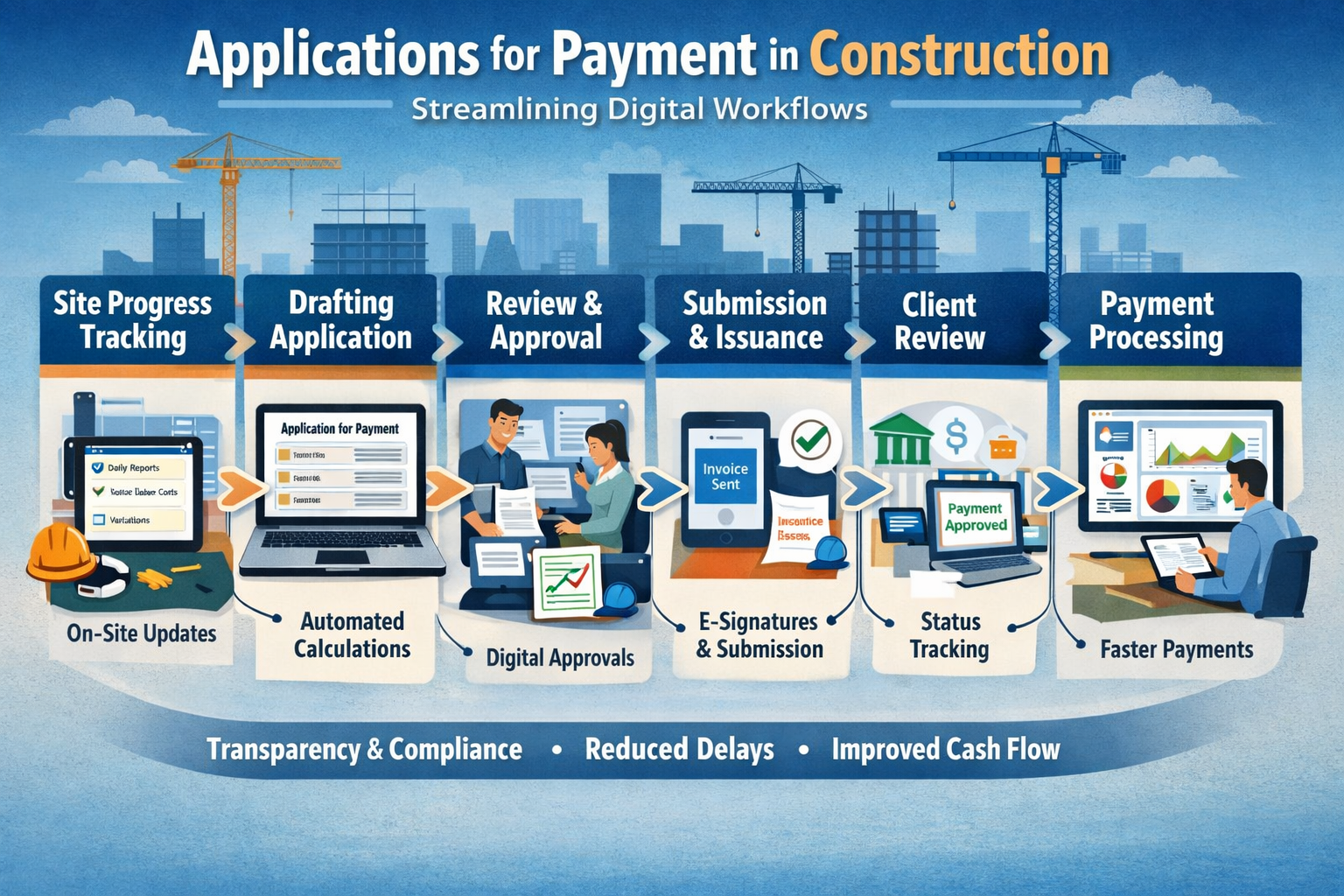
Across the industry, contractors and subcontractors rely on Applications for Payment (AFP) processes that are often manual, fragmented, and inconsistent. Paper-based documentation, disconnected systems, and complex approval workflows create delays that ripple across the supply chain. For smaller firms in particular, these delays can create significant cashflow pressures, affecting project delivery and business stability.
The challenge was not simply to build software. It was to rethink how payment applications are created, submitted, reviewed, and approved across an entire contractor ecosystem - while ensuring the solution remained simple enough for users with varying levels of digital confidence.
The result was a classic problem: modernising a deeply embedded industry process without disrupting the practical realities of construction operations.
Designing and Prototyping a Digital Payment Platform

Digital Advantage supported the development of a cloud-based digital platform prototype designed to streamline the creation and submission of payment applications across the construction supply chain.
The work combined business analysis, digital strategy, and technical development management to translate an industry challenge into a working software solution.
Key elements of the engagement included:
Industry and workflow analysis to understand how payment applications move through construction projects.
Definition of functional requirements for a digital platform that could simplify and standardise the process.
Design of a technical architecture and development roadmap.
Agile software development management, guiding the implementation of a cloud-based prototype application.
Integration planning for databases, payment systems, and cloud infrastructure.
The outcome was a prototype application that allowed contractors to create, manage, and submit payment applications digitally—reducing administrative overhead and enabling faster processing of payments.
Why it Matters: Digital Transformation in Construction
Construction is one of the world’s largest industries, yet many of its financial processes remain surprisingly analogue.
Digital platforms that streamline contract administration and payment workflows represent a significant opportunity to improve efficiency, transparency, and financial resilience across the sector. By digitising payment applications and embedding them within cloud-based workflows, organisations can reduce disputes, accelerate approvals, and improve visibility across the project lifecycle.
The roadmap developed through this project positions the solution within the broader evolution of construction technology (ConTech) and construction financial technology (FinTech). The goal was to move from isolated manual processes toward integrated digital ecosystems that connect project management, enterprise systems, and payment infrastructure. Product Roadmap
As construction companies increasingly adopt digital tools, solutions that simplify complex administrative processes while remaining practical for real-world site environments will play a crucial role in shaping the next generation of digitally enabled construction supply chains.
Evaluating What Works in SME Digital Transformation Support
The Challenge: Understanding What Works in SME Digital Transformation

During the COVID-19 pandemic, businesses across the UK were forced to rapidly rethink how they operated. Lockdowns disrupted traditional business models overnight, particularly for small businesses and creative organisations that relied on in-person interaction. Digital technologies suddenly became essential for survival—enabling online sales, remote services, and new customer engagement channels.
In response, a number of rapid digital capability programmes emerged to help organisations adapt. But an important question remained: were these initiatives actually delivering meaningful impact for businesses?
An independent, evidence-based evaluation was required to assess whether the programme had successfully strengthened digital capability, supported business adaptation, and created lasting value for participating organisations. The challenge was to provide a rigorous yet practical assessment within a short timeframe, while capturing both immediate outcomes and longer-term implications for digital transformation support programmes.
The Work: Independent Evaluation of Programme Design, Delivery and Impact

Digital Advantage was commissioned to undertake an independent evaluation of a regional digital capability initiative designed to support SMEs and small arts organisations affected by the pandemic.
The evaluation assessed the programme’s design, delivery processes, and impact on participating organisations. A qualitative methodology was adopted to capture detailed insights into programme effectiveness and the experiences of participants.
The work involved:
Stakeholder interviews with project leaders, delivery partners, and regional economic development stakeholders.
Survey research with both participating businesses and digital mentors to assess programme outcomes and value.
Desk-based analysis of programme materials, mentoring resources, and delivery processes.
Impact assessment examining immediate benefits, capability development, and longer-term business resilience.
The evaluation found that the programme delivered meaningful benefits despite its short delivery timeframe. Many participating organisations reported improved digital skills, increased confidence in adopting technology, and stronger awareness of how digital tools could support their business models. Evidence also suggested improvements in digital readiness and the ability to adapt business practices in response to external market pressures.
Why It Matters: Evidence-Based Insights for Future Digital Support Programmes

Beyond assessing a single initiative, the evaluation generated valuable insights into how digital capability programmes can most effectively support SMEs.
The findings highlighted that short, targeted interventions can significantly improve digital awareness, skills, and confidence, even when deeper transformation outcomes such as revenue growth require more time to materialise. The work also revealed key barriers faced by SMEs - including limited time, resource constraints, and the need for clearer digital strategies.
Importantly, the evaluation demonstrated the value of structured mentoring, tailored guidance, and practical digital support as mechanisms for accelerating SME digital adoption.
For policymakers, programme designers, and economic development organisations, the study provides evidence-based guidance on how future initiatives can strengthen business resilience, improve digital capability, and support long-term digital transformation across the SME economy.
Turning Digital Ambition into Strategic Direction
The Challenge: Navigating Strategy in a Rapidly Evolving Digital Economy

Many small and medium-sized businesses recognise that digital technologies are reshaping their industries - but translating that awareness into a clear strategy is far from straightforward. Leaders often face a complex mix of external pressures: evolving customer expectations, emerging technologies, changing competitive landscapes, and uncertainty about where to invest.
For many organisations, the challenge is not simply adopting new technologies but understanding how digital transformation aligns with their long-term business vision.
Without a structured way to reflect on industry trends, internal capabilities, and the risks of inaction, businesses risk drifting through the digital economy without a clear direction. Developing a coherent digital strategy therefore becomes a critical but often daunting task.
The Work: Building the Foundations for Digital Strategy

Digital Advantage supported businesses through a structured process designed to help them define and develop their digital strategy. The work focused on enabling organisations to step back from day-to-day operational pressures and reflect on their position within the wider digital ecosystem.
Through facilitated diagnostics, workshops, and strategic discussions, businesses explored key questions around industry direction, external forces shaping their markets, and the drivers for strengthening their digital capabilities. This process helped organisations evaluate their current readiness for digital evolution and identify the opportunities and risks associated with technological change.
A central component of the work involved helping leadership teams articulate a clear vision for their future business direction - creating a “north star” that could guide subsequent strategic decisions and digital investments.
As a result, participating organisations developed a stronger understanding of their digital maturity and were equipped with practical frameworks and tools to formulate their own digital strategies.
Why it Matters: Strengthening Business Capability for the Digital Era

Across industries, digital transformation is no longer optional - it is a core determinant of competitiveness, resilience, and long-term growth. Yet many organisations struggle not because they lack ambition, but because they lack structured approaches to strategy development.
Work of this nature is increasingly important as businesses seek to navigate a complex digital landscape shaped by data, automation, connectivity, and changing customer behaviour. By building internal capability to think strategically about digital change, organisations are better positioned to adapt, innovate, and remain competitive in the digital economy.
Projects like this demonstrate that successful digital transformation begins not with technology, but with clarity of vision, strategic alignment, and informed leadership.
Training with Impact: Embedding Digital Capability Across the Organisation
The Challenge: Making Digital Transformation Work for People

Digital transformation programmes introduce new technologies, platforms, and ways of working in organisations. While these initiatives promise efficiency and innovation, they often create a deeper challenge: ensuring people can successfully adapt to digital change.
Employees may face steep learning curves when new systems are introduced, particularly if they lack digital confidence or experience. Rapid technological change can disrupt established workflows, generate resistance, and create anxiety about job roles and capabilities. Without effective support, digital transformation risks becoming a source of frustration rather than progress.
For organisations seeking to modernise their operations, the question is therefore not simply how to deploy new technologies—but how to ensure that people are empowered to use them effectively.
The Work: Training Courses on Digital Transformation, Digital Change, Digital Inclusion, and Leadership
Digital Advantage designed and delivered a series of training courses to help organisations build the human capabilities needed to succeed in digital transformation. The expert-led training combined real-world case examples, and interactive workshops in which participants developed action plans for improving digital engagement in their own organisations.
The courses, delivered to participants across both the public and private sectors, included:
Dynamics of digital transformation:
This course equipped participants with the knowledge needed to assess digital initiatives in a rapidly evolving technological landscape. It examined the drivers behind digital transformation and how organisations move from simple digitalisation to broader strategic transformation that reshapes business models, services, and organisational capabilities.
Participants explored the key dimensions of digital transformation - people, processes, and technology - and examined how technologies and digital solutions and emerging technologies are reshaping industries and enabling new digital services. The course also focused on the practical realities of delivering transformation programmes, including evaluating technology proposals, understanding project cost structures, managing implementation risks, and recognising the organisational and human factors that influence successful adoption.
Through discussion and applied examples, the training helped participants develop a clearer understanding of how to critically assess digital transformation initiatives and make informed strategic decisions about technology investment and implementation
Digital Champions:
A central component of this course focused on developing Digital Champions - individuals who act as advocates, mentors, and facilitators of digital change within their organisations. This course covered how champions can build buy-in, support colleagues in adopting new systems, and help embed a positive digital culture across the workforce.
Digital Inclusion:
This training course examined the causes and consequences of digital exclusion, highlighting how disparities in access, connectivity, and skills can limit participation in the digital economy. Practical strategies were explored for designing services and systems that are inclusive and accessible for all users.
Developing Digital Skills:
This workshops introduced frameworks for assessing digital capabilities and designing effective skills development programmes. Participants learned how to diagnose skills gaps, design training interventions, and support continuous learning in rapidly evolving technological environments.

Why it Matters: Technology alone does not transform organisations - people do
As digital technologies continue to reshape industries, organisations must ensure that employees have the skills, confidence, and support needed to navigate change. Without this investment, digital initiatives can lead to resistance, inefficiency, and missed opportunities
Training programmes such as those delivered by Digital Advantage help organisations:
Build a workforce capable of adapting to digital change
Reduce resistance and improve adoption of new systems
Develop internal champions who support transformation
Promote inclusive access to digital services and opportunities